
Water Pooling in the Yard Every Spring Thaw? Why Minnesota Clay Holds It
Quick Answer: That standing water showing up every spring thaw isn't random, and it's usually not a broken drain. Minnesota's dense clay subsoil has tiny pore spaces that let water through slowly even in good conditions, and for weeks after the surface thaws, a frozen layer still sits a foot or more underground, blocking meltwater from going anywhere but sideways or up. The water pools because it has nowhere to go until that deeper ice lets go, and low spots or flat grading make the puddling worse and slower to clear. Once the ground fully thaws, most yards drain on their own, but a low spot that fills up every year without fail is a grading or drainage issue worth fixing rather than waiting out.
You walk out to check on the yard in late March, and there it is again: a shallow lake by the back fence, mud sucking at your boots near the patio, grass that squishes instead of springs back. Around Lake Minnetonka this scene repeats with almost calendar precision, snow disappears, temperatures climb into the 40s for a few days, and half the backyard looks like a retention pond. You didn't have a downpour. You didn't have a pipe burst. And yet here's the water, sitting there for days, like it's waiting for an invitation to leave.
It's not your imagination, and it's usually not a sign anything in your yard is broken. What's happening under your feet is a soil and ice problem baked into the ground itself, one that shows up every spring in this part of Minnesota whether your lawn is brand new or older than your house.
The Clay Underneath Isn't Built to Drink That Fast
Dig down a foot or two almost anywhere around Orono, Wayzata, or Minnetonka and you'll hit it: a dense, sticky layer of clay subsoil that squeezes between your fingers instead of crumbling. Glaciers left that clay behind as the base layer under most of this region's topsoil, and it behaves nothing like the sandy, loose soil you'd find somewhere with faster drainage.
Water moves through soil by finding its way between particles, through pore spaces most people never think about. Sandy soil has big, loosely packed particles with wide gaps, so water drops through fast. Clay particles are microscopic and packed tight, so water crawls through at a fraction of the speed. A clay-heavy yard can take in water at a rate measured in fractions of an inch per hour, while a sandy yard down the road might absorb several inches in that same stretch.
That's true on a dry August afternoon. In spring, it gets worse.
There's Still Frozen Ground Under Your Thawed Lawn
Here's what most homeowners miss: the surface thawing doesn't mean the ground has thawed. Minnesota winters push frost down through the soil to a typical depth of a foot and a half to two feet, though a hard winter with thin snow cover can send it deeper. Snow actually insulates the ground, so a season with deep, early snowpack can leave the soil less frozen than a season with a cold snap and bare ground. Either way, that frozen layer sits well below where your grass roots live.
When air temperatures climb in March, warmth works its way down from the top. The top few inches thaw first, snowmelt and early rain soak into that thin layer, and then the water hits a wall, literally, a band of soil still frozen solid a foot or so down. Ice fills the pore spaces almost completely, so water can't push through it any better than it could push through pavement. With nowhere to go but sideways, the meltwater spreads across the top of that frozen band, and it collects wherever the yard's slope or a dip sends it.
That's why the pooling shows up so predictably at thaw and eases off as the season goes on. Once the frozen layer works its way down and disappears, usually by April around the lake, the trapped water finally gets a path downward again, and the puddles start shrinking on their own.
Tip: If you want to know whether your yard's spring puddle is still sitting on frozen ground, push a long screwdriver or metal rod straight down near the wet spot. If it stops hard a foot or so down, you're still hitting frozen soil, and that puddle is doing exactly what it's supposed to do this time of year. Once the rod pushes through easily to two feet or more, the frost is gone and the same spot should start draining on its own within days.
Grading and Low Spots Decide Where That Water Sits
Frozen subsoil and clay set the stage, but grading decides which parts of your yard get hit hardest. Water looks for the lowest point available, and a settled spot near the foundation, a low corner from soil movement, or an old dip where mulch built up unevenly becomes the collection basin for every drop of meltwater.
A lot of yards settle slightly toward the house over the years, especially near foundations where backfill was never fully compacted. That subtle tilt, sometimes less than an inch over several feet, is enough to send water toward the foundation instead of away from it, right when the ground beneath is least able to absorb it. Other yards have a natural low pocket in the middle of the lawn, maybe where a tree used to stand, and every spring it fills in first and drains out last.
None of this looks dramatic on a dry day in July. Combine a subtle grading problem with clay that barely drains and a foot of frozen ground underneath, though, and that quarter-inch of the wrong slope turns into a puddle that sits for two weeks.
Is This Normal Spring Physics, or a Drainage System That's Actually Failing
These two situations call for different responses, and it helps to know which one you've got. Seasonal ponding tied to frost and clay follows a pattern: it shows up at thaw, it's worst in the coldest, wettest weeks of March and April, and it clears up once the ground fully thaws and spring settles into a normal rain pattern. If your yard does this every spring and behaves normally from May through November, that's the seasonal mechanism at work, not a failure.
A real drainage problem looks different. Water that pools after a heavy summer rain and takes days to clear, with the ground nowhere near frozen, points to something else: a downspout in the wrong place, an overgrown swale, a clogged drain line, or grading that never handled water correctly.
The tell is timing and persistence. Spring-thaw pooling has a clock on it, tied to the frost leaving the ground, and it eventually loses. A true drainage failure doesn't care what month it is. If a spot holds water regardless of season, or the same low area is staying wet longer each year even in summer, the issue has moved past normal soil physics into something that needs a fix.
Every Winter Packs the Clay a Little Tighter
Here's a piece most homeowners don't expect: clay that goes through repeated freeze-thaw cycles gets denser, not looser, especially in the shallow zone where freezing and thawing happen more than once a season. Ice forms in the larger pore spaces first, and as it freezes and expands, it rearranges soil particles. Add the weight of foot traffic, equipment, or heavy snow, and the structure that used to let water move through gets squeezed out a little more each year.
A yard that drained a little sluggishly ten years ago can end up draining noticeably worse today, and it's rarely one dramatic event that caused it. It's slow accumulation, worst in the spots that see the heaviest snow piles or foot traffic each winter. That's part of why a puddle that used to clear out in a week now takes two.
Aeration and topdressing help the upper few inches stay looser, and that's worth doing for lawn health on its own. But it's a shallow fix for a deeper issue. It doesn't touch what's happening a foot or two down, which is where the real bottleneck during spring thaw sits.
What Actually Changes Where the Water Goes
Since the clay isn't going anywhere and neither is Minnesota's frost, lasting fixes change the water's path instead of making the clay absorb more than it can handle. Regrading a low spot so it sheds water toward a swale, a rain garden, or a lower part of the property gives meltwater somewhere to go the moment it starts moving.
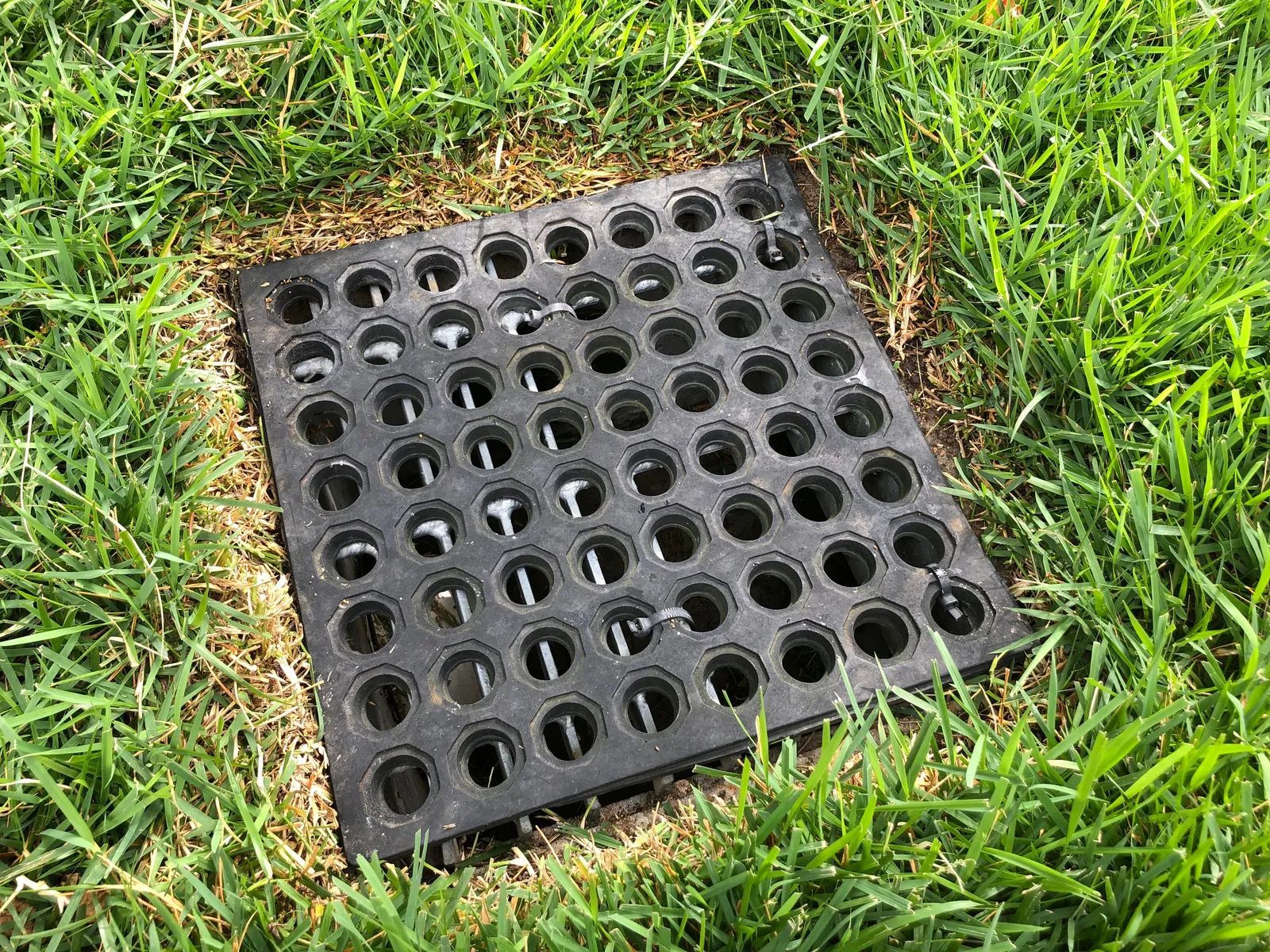
French drains, buried trenches filled with gravel around a perforated pipe, give water an easier path underground than the surrounding clay offers, intercepting it before it reaches the area you're protecting. Curtain drains do something similar closer to the surface, catching water as it moves laterally across that frozen layer and redirecting it before it pools. Both work with the clay's slow drainage rather than against it.
A dry creek bed or a properly sloped swale can carry meltwater visibly across the surface toward a spot where it can soak in or be directed away, which matters most in the weeks the ground underneath is still locked up. None of these fixes eliminate frost or clay. They reroute the water while those conditions work against you, which is the part of the equation you can actually control.
Warning: Be careful about dumping extra topsoil or fill dirt on top of a low spot as a quick fix without addressing where the water is supposed to go afterward. Adding soil without a plan for drainage can just raise the puddle to a slightly higher spot, or worse, push water toward a neighboring yard or your own foundation instead of solving the problem. A grading fix needs a destination for the water, not just a higher starting point.
Frequently Asked Questions
Why does my yard flood every spring but stay fine all summer?
That points to frost and clay, not a drainage failure. A still-frozen layer of subsoil blocks meltwater from draining down, so it pools on top until the ground fully thaws and normal drainage returns.
How long should spring pooling last before I get concerned?
Most clay yards around Lake Minnetonka clear within a few weeks of surface thaw, roughly by mid to late April. Water still standing into May, or returning during summer rain, is worth checking.
Does aerating my lawn fix the spring pooling problem?
It helps the top few inches, not the deeper issue. Aeration loosens surface soil so water and air move more easily, but it can't reach the frozen layer a foot down blocking drainage.
Is standing water near my foundation in spring dangerous?
It's worth taking seriously, even if it clears most years. Water sitting against a foundation during thaw can seep into a basement through cracks. If it pools directly against the house, address it.
Can I just fill in the low spot with dirt to stop the puddling?
Only if the added soil gives water somewhere new to go. Piling dirt on a low spot usually just shifts the puddle a few feet. A lasting fix regrades the area with proper slope.
How to Tell Seasonal Pooling From Real Trouble
Spring pooling in a clay-soil yard isn't a sign your lawn is failing, and it rarely means anything underground is broken. It's Minnesota's glacial clay and its frost line doing what they've always done, holding meltwater near the surface until the deeper ground finally lets go. The real question is timing. Seasonal pooling carries an expiration date somewhere in April, while a genuine drainage failure returns no matter the month, no matter how dry the weather has been.
Metro Pro Inc
has spent 28
years
caring for lawns
throughout Orono, MN, learning how this region's clay behaves once the thaw arrives. A low spot that fills every March and clears by late April is simply following the pattern. The same spot staying wet longer each year, or water gathering against a foundation, tells a different story. Knowing which one you're looking at is what separates waiting out an ordinary spring from catching a small problem before it grows.