
Retaining Wall Bulging or Cracking After Freeze Thaw? What's Failing
Quick Answer: A retaining wall that bulges or cracks after a Minnesota winter is almost never failing because of the blocks or stone themselves. The usual cause is water trapped in the soil behind the wall. That water freezes, expands, and thaws again many times a season, and wet clay pushes far harder than dry soil. Vertical cracks, stair step cracks, a forward lean, or a belly near the middle all point to pressure building behind the wall that has nowhere to go. Patching the face does not fix it. The lasting answer is to give the water a path out, and to rebuild the backfill zone if it is packed with clay.
You walk out in April to see how the yard came through winter, and something about the wall along the back slope looks off. The top course no longer runs in a straight line. A crack that was not there in October now climbs through two courses of block. Maybe the middle of the wall seems to lean toward the lawn, or a cap stone has shifted a half inch. You press a hand against it and it feels solid, so you tell yourself it is cosmetic.
Walls rarely announce a failure all at once. They move a little each freeze cycle, and the movement you can see in spring is the visible part of a process that has been building behind the wall for a long time. Around Lake Minnetonka, where clay soil, hillside lots, and long winters all work against a wall, that process is well understood. Knowing what is pushing on your wall tells you how urgent it is and what kind of repair actually holds.
What Is Pushing on Your Wall
Every retaining wall holds back a mass of soil that wants to move downhill. Dry, loose, free draining soil pushes with a manageable, steady force, and a properly built wall is designed for that. The trouble starts when the soil behind the wall gets wet.
Water adds weight, and it adds pressure. When soil behind a wall fills with water and the water cannot escape, it presses sideways against the wall the same way water presses against the side of a full tank. Wet soil pushes much harder than dry soil, and a wall designed for the dry condition can be asked to carry a far heavier load every time the ground is saturated. Add a clay soil that holds water for weeks, which describes much of the western Twin Cities, and the wall spends a large part of every spring and fall under load it was never sized for.
This is why two walls built the same year with the same blocks can age so differently. The wall with a clear path for water to leave the back of the wall stays straight. The wall without one slowly bows.
How Freeze and Thaw Make It Worse
Water by itself is a problem. Water that freezes is a bigger one. When the wet soil behind your wall freezes, the water turns to ice and expands, and that expansion pushes the soil outward in every direction, including toward the face of the wall. Frozen soil can also grip the back of the wall and lift or drag it as the ground heaves.
Then it thaws. The soil settles back, but the wall usually does not return to where it started. A few thousandths of an inch of permanent movement per cycle sounds small, yet Minnesota can deliver dozens of freeze and thaw cycles in a single winter and spring, especially in March and early April when days thaw and nights refreeze. Each cycle ratchets the wall a little further out of position.
Frost can also affect the base. If the first course of a wall sits on a shallow or poorly built base, the frozen ground beneath it can heave it unevenly. That tends to show up as a wall that has dropped or lifted in sections rather than one that has bowed outward.
Tip: After the first hard rain of spring, walk the top and the bottom of the wall. Dark water stains on the face, a wet strip at the base, or soil that has washed out from under the lowest course tell you water is moving through the wall instead of leaving behind it. Take a photo and a date so you can compare next year.
Reading the Cracks and Bulges
The shape of the damage tells you a lot about what is going on, and the clues are worth learning before anyone picks up a tool.
A Forward Bow Or Belly
A wall curving outward in the middle while its top and bottom remain relatively straight often indicates sustained pressure from saturated soil. The middle bows because its ends provide greater support.
A Steady Forward Lean
When an entire wall tilts toward the yard, the base may be shifting, the wall may lack adequate setback, or backfill pressure may be pushing continuously along its full length.
Stair Step Cracks
Diagonal cracks following mortar or block joints often indicate uneven pressure or movement beneath the wall. These patterns suggest one section is shifting more significantly than the other sections.
Vertical Cracks
Vertical cracks can develop when frost and soil pressures combine. They frequently appear near drain openings or corners, where structural weaknesses or concentrated stresses may contribute to cracking.
Gaps Behind The Cap Or At The Top
A gap between the wall's back edge and the soil indicates possible forward rotation. As the wall moves, it pulls away from the material it was originally retaining.
Settling At The Base
When one section of a wall drops, the underlying base may be weak, saturated, or poorly compacted. This indicates foundation movement rather than pressure from behind alone.
Frost heave on its own tends to lift sections while leaving the wall face fairly flat. When you see an outward bow or a lean, the evidence points to pressure from behind, and water is nearly always the reason.
The Backfill Behind the Wall Matters Most
Most homeowners look at the face of a wall, but the part that decides whether it survives winter is the zone you cannot see, the few feet of material directly behind it. A well built wall has clean, free draining gravel in that zone, a layer of filter fabric to keep soil from clogging the gravel, and a perforated drain pipe at the bottom that carries water out to daylight or to a safe discharge spot.
A wall that fails early often has the opposite. Heavy native clay was shoveled back against the blocks because it was the soil that came out of the hole. Clay packs tight, drains slowly, and holds water against the wall. Add compaction done in thick layers instead of thin ones and the backfill settles later, leaving voids that channel water exactly where you do not want it.
Weep holes are another common point of confusion. They help only when the drainage behind them works and the openings stay clear. A weep hole that opens into a pocket of clay, or one buried under mulch or soil at the base, does nothing at all.
Water Coming From Above the Wall
Sometimes the wall is built correctly and the water arrives faster than the drainage can handle. Check what happens above and beside the wall during a storm or a thaw.
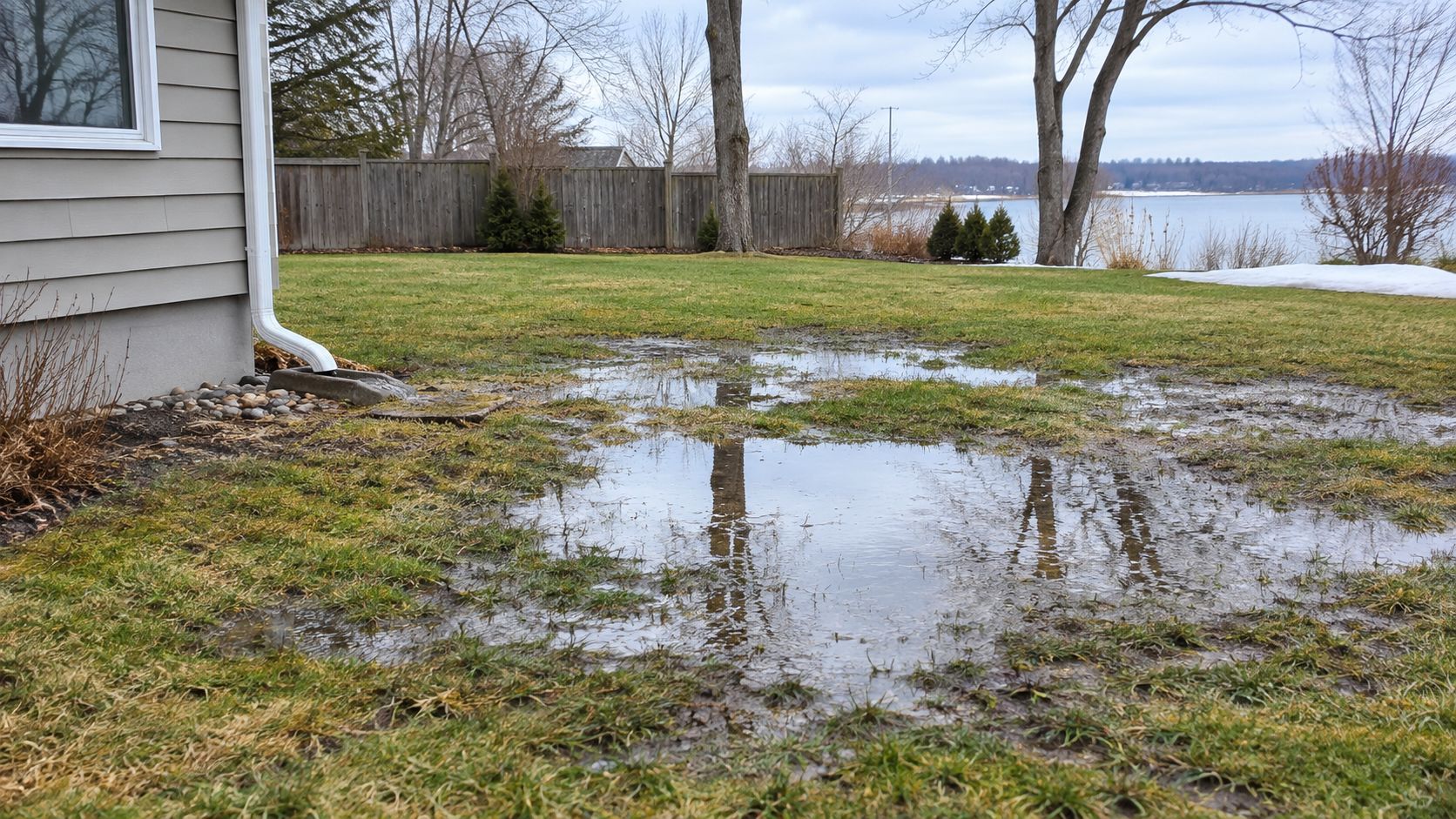
A downspout that discharges near the top of the wall dumps roof water right into the soil being held back. A lawn that slopes toward the wall delivers surface runoff directly to it. A patio or driveway above the wall that sheds water toward the edge does the same thing. Even a sprinkler zone that waters the top of the slope all summer leaves the soil near saturation going into fall, which means the soil is already full when the freeze arrives.
Warning: A wall that is leaning, bowing, or shifting can fall without much notice, especially after heavy rain or during a thaw. Keep children, pets, and furniture away from the base, and do not dig or pile soil against a wall that is already moving. Have it looked at before the next wet or freezing stretch.
What Can Wait and What Cannot
Not every crack means a rebuild. A hairline crack in one block, with no lean, no bow, and no shifting, can often be watched over a season. Mark both ends of the crack with a pencil line and measure it in a few months. If nothing changes, you have a cosmetic issue.
Movement that you can measure is a different matter. A wall that has gained a lean since last fall, a bow that is visibly larger, a crack that has widened, or any wall that has started to separate from the soil behind it needs attention soon, because the next freeze cycle will push it again from a weaker position. Walls that retain a lot of soil, such as those along a driveway, beside a walkout, or near a structure, deserve extra caution.
Patching alone rarely holds. Filling a crack or resetting a cap stone leaves the pressure in place, so the wall simply moves again. The repair has to deal with the cause.
How a Lasting Repair Actually Works
The right fix depends on how far the wall has moved, but the logic is the same each time. Water has to leave, and the soil behind the wall has to stop acting like a sponge.
For a wall with minor movement, the repair may focus on drainage. That can mean redirecting downspouts and surface water away from the top of the wall, clearing weep openings, regrading the slope above so runoff goes elsewhere, and adding a drain path where there was none.
For a wall that has bowed or leaned noticeably, the repair usually means taking the affected section apart, excavating the backfill zone, and rebuilding it properly. The crew sets a level, compacted base, replaces the clay with clean drainage gravel, wraps it in filter fabric, installs a perforated pipe sloped to carry water out, and compacts the new backfill in thin lifts. The blocks go back with the right setback so the wall leans into the soil rather than away from it. Taller or heavily loaded walls may also need reinforcement tied into the soil behind them.
If the wall has been moving for several winters, rebuilding often saves trouble in the long run compared with repeated partial fixes, because the same water keeps pushing the same weak spots. Either way, the work is done in the dry months, when the soil can be opened up and compacted correctly.
Planning Ahead Before the Next Freeze
If your wall looks fine now but you have noticed damp spots or a slightly uneven top, fall is the best time to act. Soil that is dry going into winter holds far less water to freeze. Clear any weep openings and pull mulch and soil away from the base. Send downspouts well away from the wall. Walk the slope above and note where water runs during a storm.
If you are planning a new wall, build the drainage first and the appearance second. A wall with a clean gravel zone, a pipe that actually goes somewhere, and a base set below the reach of frost will outlast one that only looks good on the first day.
Frequently Asked Questions
Why did my retaining wall only start bulging after a few winters?
Movement builds slowly. Each freeze and thaw cycle shifts the wall a tiny amount, and those changes accumulate. A wet fall followed by a hard freeze often pushes a borderline wall past the visible point.
Are weep holes enough to keep a wall from bulging?
No. Weep holes only work when the material behind them drains freely and the openings stay clear. If the backfill is clay, or the holes are blocked, water still builds up behind the wall.
Can I just fill the cracks and reset the cap stones?
That may make the wall look better, but it does not stop what caused the movement. Cosmetic repair makes sense only for minor cracks with no measurable movement and no drainage problem behind it.
Is a leaning wall dangerous?
It can be. A wall that leans or bows has already moved from its design position, and heavy rain or another freeze can push it further. Keep people and valuables away from the base until assessed.
How do I know if the problem is frost or water pressure?
Frost heave tends to lift or drop sections and leave the face flat. An outward bow, a lean, or stair step cracking points to pressure from behind, nearly always tied to poor drainage.
When is the best time to repair a bulging wall?
Late spring through early fall, when the ground is thawed and dry enough to excavate and compact properly. Waiting through another winter lets the wall move further, so schedule before the next freeze hits.
Reading the Warning Signs Before Another Winter
A retaining wall is a simple structure doing a hard job, and in this climate the hard part is always water. A bow, a lean, or a stair step crack is the wall telling you that saturated soil and frost have been pushing on it with nowhere to drain. Patching the face hides that message without answering it. The shape of the damage points to the cause, and the cause almost always sits in the wet backfill behind the blocks.
Addressed early, a moving wall is a manageable repair rather than a rebuild, and the window to open the ground and set drainage right runs from late spring through early fall. Metro Pro Inc
has built and repaired walls throughout Orono, MN for 28
years, and the clay hillsides and long freezing seasons here are what shape how every base, backfill zone, and drain path gets set. A wall that drains well in October is a wall that stands straight in April.