
Why Does My Lawn Look Patchy in Spring? 5 Common Causes Homeowners Miss
Spring is the season when homeowners expect lush green lawns to return after months of cold weather and dormancy. Instead, many properties begin showing uneven growth, brown circles, thin turf, and bare patches that make the yard appear unhealthy and neglected. A patchy lawn during spring is one of the most common concerns in residential lawn care because winter conditions often hide deeper problems that become visible once temperatures rise. While many homeowners assume fertilizer alone will solve the issue, patchiness is often caused by multiple underlying conditions that require a more informed approach.
Understanding why lawns struggle during spring is important for protecting curb appeal, improving soil health, and preventing long-term turf damage. Healthy grass relies on balanced nutrients, airflow, moisture control, and strong root development throughout every season. When one or more of these factors become disrupted, the lawn responds with discoloration and thinning areas. Identifying the true cause early allows homeowners to restore healthy growth before summer heat places additional stress on weakened turf and creates more expensive lawn restoration challenges later.
1. Soil Compaction Prevents Healthy Root Growth
Heavy Winter Traffic Creates Hidden Damage
One of the most overlooked reasons for patchy spring lawns is soil compaction caused by winter foot traffic, snow accumulation, and frozen ground pressure. During colder months, lawns often experience repeated compression from walking paths, parked equipment, snow piles, or recreational activity.
Grass roots require loose, breathable soil to absorb nutrients and water. When the soil becomes tightly packed, roots struggle to grow deeper into the ground. As a result, sections of the lawn begin thinning while surrounding areas remain healthy. This uneven growth pattern creates the patchy appearance many homeowners notice in early spring.
Signs of Compacted Lawn Areas
Compacted areas often show several noticeable symptoms. Grass may appear weak, faded, or slow to green up after winter dormancy. Water may pool on the surface rather than soaking into the soil. Some homeowners also notice harder ground texture in affected areas compared to healthier sections of the yard.
Lawns exposed to frequent activity commonly develop compaction near sidewalks, driveways, patios, and play areas. Properties with clay-heavy soil are especially vulnerable because dense soil particles compress more easily under pressure.
Best Solutions for Soil Compaction
Core aeration is one of the most effective solutions for relieving compacted soil. This process removes small plugs of soil from the lawn, improving airflow and helping water penetrate deeper into the root zone. Spring aeration also supports nutrient absorption and encourages healthier turf development.
2. Snow Mold and Fungal Disease Damage Grass
Moisture Trapped Beneath Snow Cover
Fungal lawn diseases become especially active during late winter and early spring when moisture remains trapped beneath snow cover or damp organic debris. Snow mold is one of the most common fungal conditions affecting residential lawns after winter. It develops when grass stays wet for extended periods without proper airflow or sunlight exposure.
Once the snow melts, homeowners may notice circular gray, pink, or straw-colored patches scattered across the yard. These damaged sections often appear flattened or matted down. In severe cases, the grass becomes weak enough to die completely.
Conditions That Encourage Lawn Fungus
Several environmental factors contribute to fungal lawn disease during spring. Thick layers of fallen leaves, excessive thatch buildup, poor drainage, and overwatering create ideal moisture conditions for fungal growth. Lawns cut too short before winter may also become more vulnerable because weakened grass struggles to recover once temperatures change.
Cool-season grasses frequently experience fungal outbreaks during transitional weather because fluctuating moisture levels place additional stress on turf health. Shaded areas with limited sunlight often remain damp longer than open spaces, increasing disease risk.
Preventing and Treating Lawn Disease
Proper lawn maintenance plays a major role in preventing spring fungal issues. Removing leaves before snowfall improves airflow and reduces trapped moisture. Maintaining appropriate mowing height during fall also strengthens grass before winter dormancy begins.
If snow mold appears during spring, lightly raking affected sections can help separate matted grass and improve drying conditions. Aeration and overseeding may help restore damaged areas once soil temperatures warm. Severe fungal outbreaks sometimes require professional lawn treatment to stop disease spread and improve recovery.
3. Pet Damage Creates Brown and Bare Spots
Why Pet Urine Causes Lawn Burn
Pet-related lawn damage becomes far more noticeable during spring because dormant winter grass cannot repair itself immediately after exposure. Dog urine contains concentrated nitrogen and salts that can overwhelm grass tissue and burn the lawn. Once temperatures rise, these damaged spots appear as yellow or brown circles surrounded by darker green rings.
Repeated Exposure Weakens Turf
Lawns exposed to repeated pet activity experience ongoing stress throughout the year. Over time, soil chemistry changes in concentrated areas, making it harder for healthy grass to regrow naturally. Female dogs often create more visible damage because urine becomes concentrated in one location rather than spread across larger sections.
Backyards with limited grass space are particularly vulnerable because repeated exposure occurs within smaller, concentrated zones. During spring recovery, these damaged sections become more visible as the surrounding grass begins to green up.
How Homeowners Can Reduce Pet Damage
Watering affected areas immediately after pet activity can help dilute nitrogen concentration before grass tissue becomes damaged. Training pets to use designated sections of the yard may also reduce widespread lawn spotting.
Overseeding damaged areas during spring can help restore turf density. Homeowners may also benefit from choosing grass varieties with stronger tolerance to pet activity and environmental stress. Soil testing can identify imbalances that may require treatment before reseeding begins.
4. Poor Drainage Creates Thin and Unhealthy Turf
Excess Water Suffocates Grass Roots
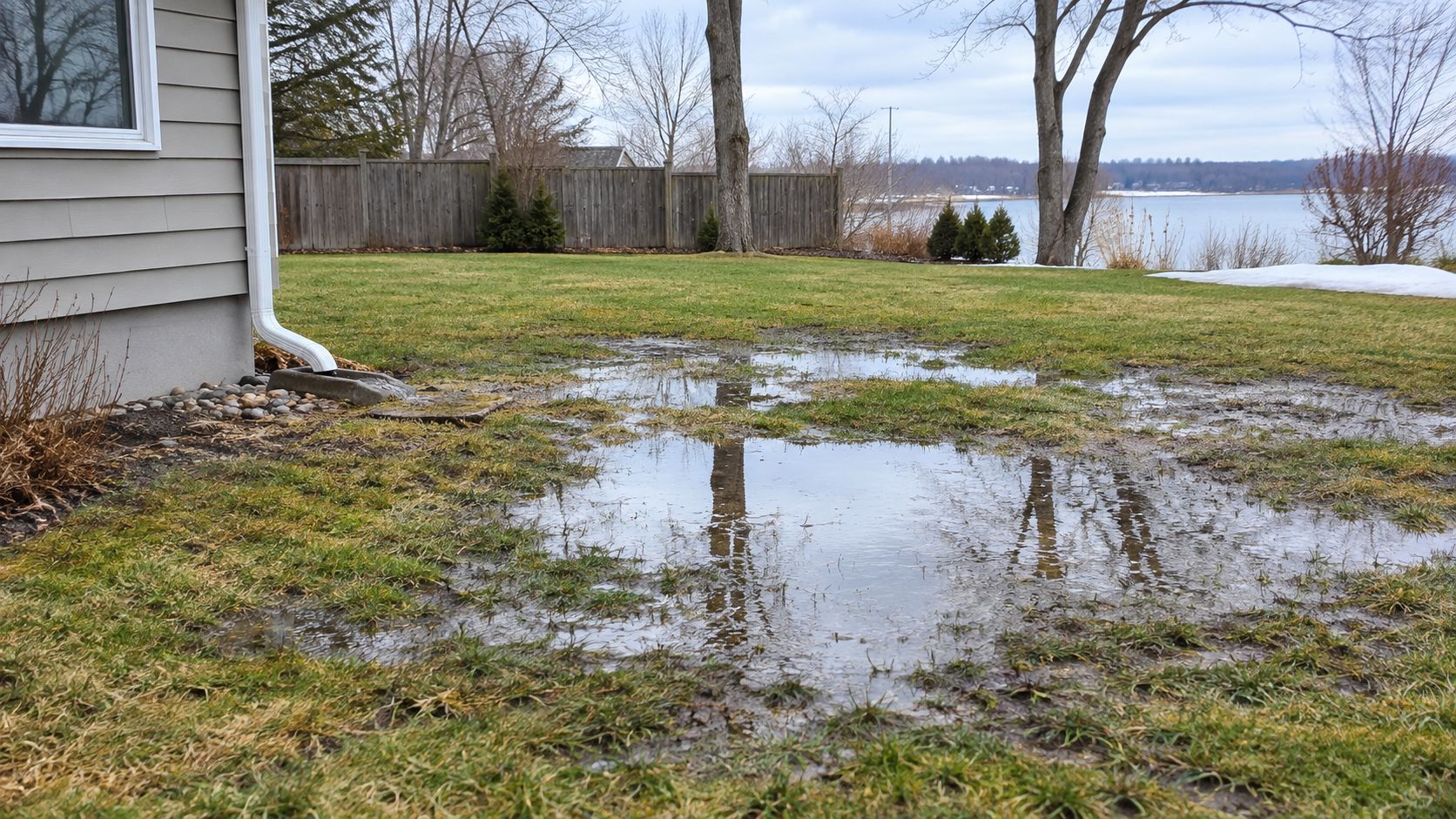
Drainage problems are another major reason lawns appear patchy during spring. Snowmelt and seasonal rain often saturate low areas of the yard, creating standing water and overly wet soil conditions. While grass requires moisture for growth, excessive water prevents roots from accessing oxygen.
When water remains trapped for long periods, the grass roots begin weakening and may eventually rot. Thin turf, yellow discoloration, moss growth, and muddy sections often indicate drainage-related lawn stress. Some areas may recover slowly while severely affected patches remain bare.
Common Causes of Lawn Drainage Issues
Improper grading is one of the most common causes of standing water in residential lawns. Properties with uneven slopes may direct water toward low sections instead of allowing proper runoff. Compacted soil and heavy clay content can also prevent moisture from draining naturally.
Gutters and downspouts that release water directly onto the lawn often contribute to localized flooding. In some cases, underground irrigation leaks or broken drainage systems may worsen moisture problems without homeowners realizing the source.
Improving Lawn Drainage Conditions
Correcting drainage problems usually requires a combination of landscaping adjustments and soil improvement strategies. Aeration can improve water absorption in compacted areas, while adding organic material may help loosen dense soil.
Homeowners should avoid overwatering during spring since natural rainfall often provides enough moisture for healthy growth. Addressing drainage problems early helps reduce future disease risk and supports stronger root development throughout the growing season.
5. Nutrient Deficiencies and Improper Lawn Care Practices
Spring Fertilizer Mistakes Hurt Lawn Recovery
Many homeowners unintentionally damage lawn health through improper fertilization and seasonal maintenance habits. After winter dormancy, grass requires balanced nutrients to rebuild root strength and support new growth. However, applying the wrong fertilizer or using excessive amounts can create uneven lawn development.
Some sections may receive too much nitrogen while other areas remain nutrient-deficient. This imbalance often produces irregular coloring, rapid growth patches, and weak turf sections vulnerable to disease and drought stress.
Inconsistent Mowing Habits Create Stress
Improper mowing practices also contribute to patchy spring lawns. Cutting grass too short removes valuable leaf surface needed for photosynthesis and root recovery. Scalping weak spring turf places additional stress on grass already recovering from winter conditions.
Dull mower blades may tear grass instead of cutting cleanly, leaving damaged tips vulnerable to discoloration and disease. Uneven mowing patterns can also create an inconsistent lawn appearance throughout the yard.
Building Long-Term Lawn Health
Healthy lawns require ongoing seasonal care rather than quick cosmetic fixes. Soil testing helps identify nutrient deficiencies before fertilizer applications begin. Using slow-release fertilizer products often provides more balanced growth and reduces nutrient shock.
Regular watering schedules, aeration, overseeding, and seasonal inspections all contribute to healthier turf development over time. Homeowners who focus on long-term soil health typically experience fewer patchy lawn problems during spring transitions.
Restoring Healthy Green Lawns Starts With Professional Care
A patchy spring lawn often signals deeper issues that require more than simple watering or fertilizer applications. Soil compaction, fungal disease, pet damage, drainage problems, and nutrient imbalances all contribute to uneven turf growth that weakens lawn appearance and overall property health. Identifying these conditions early allows homeowners to take corrective action before summer temperatures place additional stress on damaged grass. Strong lawn recovery depends on proper soil management, balanced maintenance routines, and seasonal care tailored to changing environmental conditions.
At Metro Pro Inc
in Orono, we bring 28
years of hands-on experience helping homeowners
improve lawn health, drainage conditions, and long-term property appearance through dependable outdoor care solutions. Our approach focuses on identifying the true source of lawn problems rather than relying on temporary surface treatments. We understand how seasonal climate conditions, soil composition, and maintenance habits affect turf performance throughout the year. Our commitment to quality workmanship, practical solutions, and long-term property care continues to make us a trusted choice for homeowners seeking reliable lawn and landscape support.